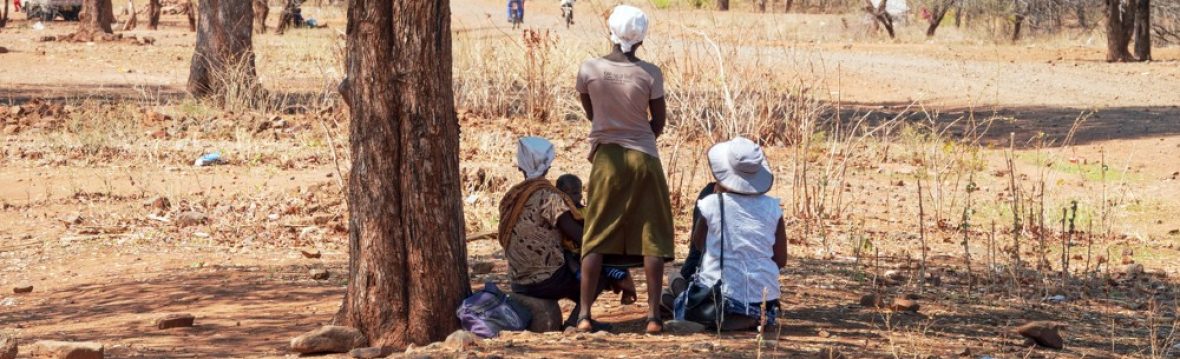
We are an interdisciplinary group of clinicians and scientists, joined in our commitment to advancing global child health.

Professor in Paediatric Infection and Immunology and Wellcome Trust Senior Clinical Fellow
Andrew Prendergast graduated from Cambridge and Imperial College, and undertook his paediatric training in London, specialising in paediatric infectious diseases and immunology. After undertaking a DPhil in Oxford, investigating immunological and clinical aspects of paediatric HIV infection, he was an Academic Clinical Lecturer in the Department of Paediatrics, University of Oxford, where he continued research into paediatric HIV infection in Oxford and South Africa, and work on HIV clinical trials in sub-Saharan Africa through the MRC Clinical Trials Unit at UCL. He was subsequently awarded a Wellcome Trust Intermediate Clinical Fellowship and appointed as Senior Lecturer, then Reader, then Professor in Paediatric Infection and Immunology at Queen Mary, University of London. In 2016, he became a Wellcome Trust Senior Clinical Fellow, and he now divides his time between London, where he is based at the Blizard Institute, and Zimbabwe where he serves as director of the Zvitambo Institute for Maternal and Child Health Research.

Following the successful completion of her undergraduate degree in Biotechnology, Annie subsequently completed a Master of Science in general biology from New York University and an MRes in Biomedical sciences, from Imperial College London; while there, she performed research investigating dietary and drug interactions in a murine model and its affects upon metabolomic profiles in numerous sample types using NMR and Mass- Spectrometry.
In 2022 Annie joined the Blizard Institute of Cell and Molecular Science, in the centre for Genomics and Child Health at Queen Mary, University of London. Here, she is a lab scientist and processes microbiome samples for REALITY, COMBI and CHAIN trials. Her current work focuses on metabolomics, microbiome dynamics and human health.
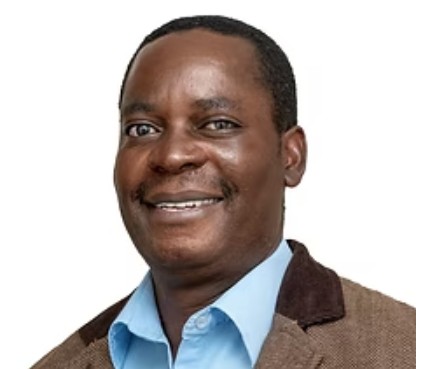
Bernard Chasekwa is a biostatistician at Zvitambo Institute for Maternal and Child Health Research. He holds a BSc in Biological sciences and Statistics (University of Zimbabwe) and a MSc in Medical Statistics (London School of Hygiene and Tropical Medicine).
His areas of interest include statistical mediation modelling. He is a PhD student registered with Queen Mary, University of London. His PhD project explores mechanistic pathways underlying low birthweight in rural Zimbabwean women.

Elaine Parker is currently a doctor doing an NIHR Academic Clinical Fellowship in Gastroenterology at Queen Mary, University of London. Her interests lie in the intersection between Gastroenterology and maternal health and to this end will be working on a study looking at the link between intestinal barrier dysfunction and preterm birth in the context of extreme heat (Climate Change).
She started her career in 2007 with a BSc in Biomedical Sciences at St George’s University of London where she developed an interest in Immunology, maternal health, and placental physiology.
Following her BSc she went on to study Medicine at Durham and Newcastle Universities where her interests in Maternal health and infection continued to develop, leading to an MSc in Tropical Medicine and International Health at the LSHTM following her foundation training.
In 2019, she spent a year working at Washington University in St Louis. It was during this period of research that Elaine further realised her interest in infectious diseases in the context of maternal health and the role of the maternal microbiome in infection, which later evolved into an interest in Gastrointestinal and Hepatic infections. Following this Elaine returned to the UK to begin her training in Internal medicine and begin her ACF in Gastroenterology at Queen Mary.
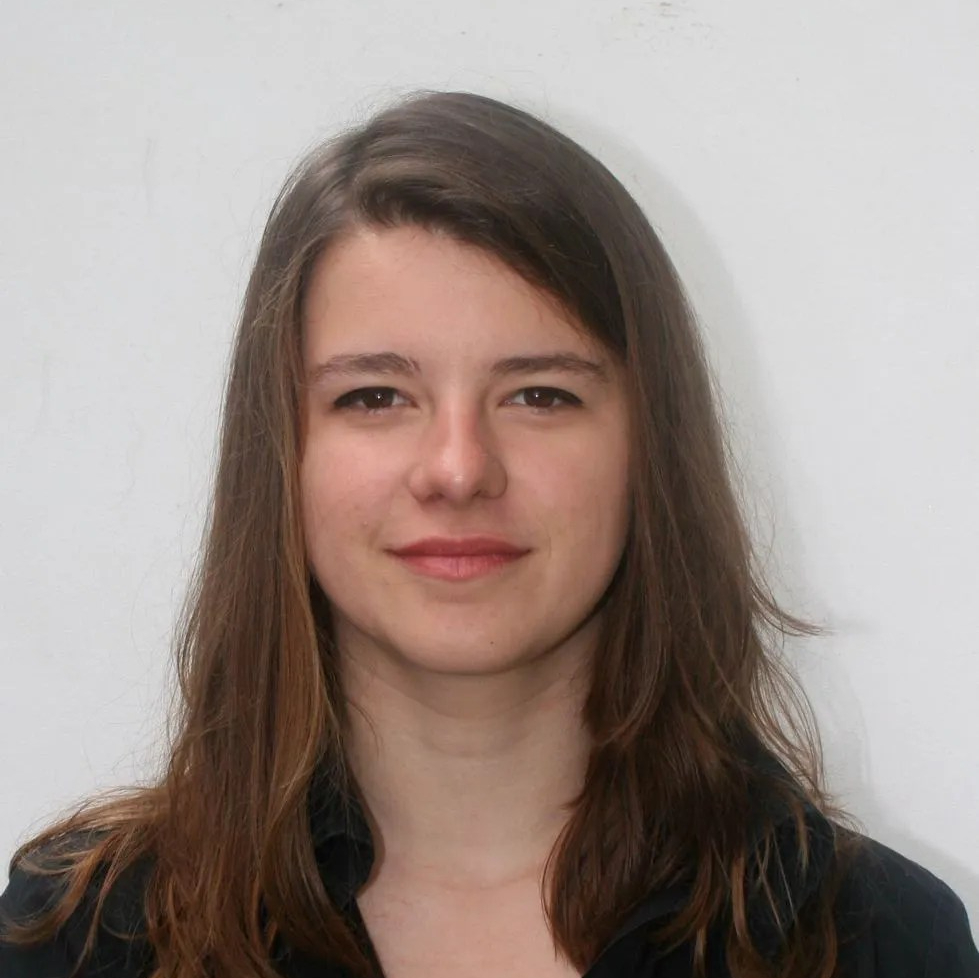
Helen successfully graduated with a Bachelor of Science in Zoology from the University of Bristol and proceeded to commence her PhD at the University of Warwick. The PhD thesis worked on molecular microbiology in environmental microbiology using next generation sequencing. Helen has since worked on a variety of research projects as a postdoctoral research associate including marine biology, microbiology diagnostic development for urinary tract infections and later, tuberculosis; working with other teams has also empowered Helen to develop skills in immunology whilst working on immune function in an arthritis and diabetes model. Helen has experience of working with a wide range of microorganisms including pathogens, commensal bacteria, phage, and algae. During these contracts, Helen has worked both in core academia as well as in conjunction with industrial partners.
Helen currently works as postdoctoral researcher in the Centre for Genomics and Child Health working specifically on sub-studies associated with Professor Prendergast’s clinical trials. Helen has a strong research interest in microbiome structure and function in the context of health and disease (including Severe Acute Malnutrition, stunting and HIV) of maternal and child health as well as pathogen and enteric dysfunction dynamics.

I’m an Academic Clinical Lecturer and UK Paediatrician (ST6 GRID ID registrar) particularly interested in what shapes child growth and function. I have worked in Kenya (KEMRI) on severe malnutrition and completed a Wellcome Trust Fellowship examining School-age outcomes from the SHINE cluster randomised trial on stunting in Zimbabwe.
There I developed an interest in school-age measures of growth, body composition, physical and cognitive function. These provide an insight into long-term effects of interventions and area also highly predictive for adulthood. I also work on the long-term effects of HIV exposure, environmental, maternal and nurturing influences. Currently, I am co-leading phase 3 of the SHINE Follow-up study, exploring detailed cognitive, psychological, physiological and health outcomes from early-life exposures.
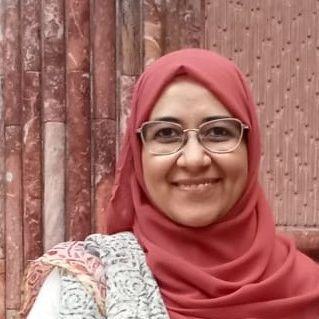
Aneela Pasha is a Senior Instructor and PhD Candidate, Aga Khan University (AKU), Department of Paediatrics and Child Health, Karachi, Pakistan. She holds an Honours BSc degree from McMaster University, Canada, in Biology & Pharmacology, and an MSc in Epidemiology & Biostatistics from AKU. She was awarded the NIH Fogarty D-43 fellowship in Paediatric Infectious Disease and Malnutrition in Pakistan (PIDEMP). Through her work on the MUMTA trials, she examines how nutritional interventions and prophylactic azithromycin influence maternal and infant outcomes through pathways involving infection, inflammation, and the microbiome, generating evidence to improve maternal and child health in low- and middle-income countries. In addition, she led the International Vaccine Institute (IVI)- sponsored Global Burden of Human Papilloma Virus (GLOBE-HPV) study in Pakistan. The study provided important insights into the prevalence and incidence of HPV infection among girls and women from both urban and rural settings.
Joanna joined QMUL and the Prendergast group in 2020, to research the determinants and outcomes of poor childhood growth in the UK. Recent publications include a mapping of short stature prevalence across England using data from over 7 million children, and an analysis of the longitudinal associations between short stature and language development in UK children.
Her research interests include the social determinants of health and lifecourse health trajectories.
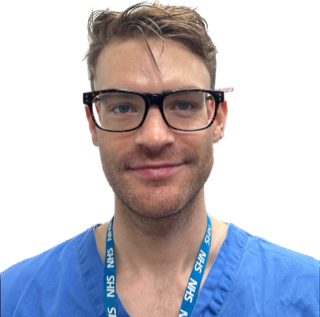
I’m an NIHR In-Practice Fellow at the Wolfson Institute of Population Health, Queen Mary University of London. I divide my time between academic work in child public health, postgraduate study in Epidemiology at the London School of Hygiene & Tropical Medicine and clinical practice as a General Practitioner in east London. I graduated in medicine from Imperial College London and in philosophy from King’s College London, after which I undertook postgraduate training in tropical medicine at LSHTM.
I have worked in public health roles with UK Parliament, WHO and the Department of Health in Cape Town, alongside research investigating overlapping areas of maternal and child health. In 2017, I was awarded an NIHR Academic Clinical Fellowship, which I used to co-develop a growth and development screening pilot programme in east London, in addition to research investigating relationships between poverty and growth.

After gaining a Bachelor of Science in Mathematics, Melanie studied a Masters in Statistics at University College London. Her previous experience of working full time for over a year as a biostatistical programmer at a biotechnology company (Amgen), coupled with the inspiration from the Master course encouraged Melanie to continue in statistical research. Melanie completed a PhD in missing data methodology at the London School of Hygiene and Tropical Medicine (LSHTM).
Following her PhD, Melanie moved to Queen Mary University of London (QMUL) to work as a research fellow in medical statistics within the Centre for Psychiatry. She left QMUL to work as a senior statistician within the National Centre for Social Research (NatCen), however returned to QMUL in 2017 as a lecturer in medical statistics within the Pragmatic Clinical Trials Unit. Melanie then joined LSHTM in 2020 as an Assistant Professor to take up the role of Program Director for the MSc in Health Data Science.
In December 2021, Melanie joined QMUL’s Centre for Genomics and Child Health and the Prendergast Group as a lead statistician for the groups research projects. In 2023 Melanie was promoted to Reader in Medical Statistics.

Michael Papasavva is an early-career cognitive neuroscientist affiliated with Queen Mary, University of London, and the Zvitambo Institute for Maternal and Child Health Research in Zimbabwe. His research integrates structural low-field Magnetic Resonance Imaging (MRI), Electroencephalography (ERP/EEG), and developmental assessments (e.g., Griffiths III) to examine cognition, neurodevelopment, and overall well-being in children. His work primarily explores how HIV exposure, growth trajectories, inflammatory biomarkers, and socio-economic determinants influence health and developmental outcomes in traditionally underserved populations.
Michael is a co-investigator and co-recipient of a UKRI Medical Research Council grant supporting the SHINE second follow-up study, which investigates long-term developmental outcomes associated with early-life interventions.
In addition to his research activities, Michael serves as a neurodevelopmental consultant listed on the roster of specialists for the United Nations’ World Health Organisation. He also holds adjunct lecturer positions at Barts and The London School of Medicine and Dentistry, actively engaging in the education and mentorship of medical and neuroscience students.
Dr Papasavva is both a charted psychologist with the British Psychological Society and a member of the British Neuroscience Association, where in 2025, he was awarded the Green Neuroscience Award for his pioneering work in creating a solarised Hyperfine MRI laboratory, the first of its kind in the world.

My research aims to follow up children discharged from hospital following management of severe acute malnutrition to determine their clinical and nutritional outcomes and what factors, at discharge, predict long-term morbidity, mortality and nutritional relapse.
The aim of this work is to help identify children at risk and provide targeted interventions to improve their long-term outcomes. Determination of body composition will also provide data on the predeterminants of subsequent adult metabolic disease.

Shrey is an NIHR Academic Clinical Fellow in Primary Care. He is interested in the role of national and global policy changes to improve antibiotic use. At QMUL, his work aims to better understand global cotrimoxazole strategies and their impact on child health. He is also working to better classify antibiotics in the WHO Essential Medicines List. He divides his week between his clinical role as a primary care physician in East London and his academic roles.
Prior to his current role, Shrey evaluated the evidence base for paediatric antibiotics at St George’s, University of London. In Germany, he has worked on improving prehospital stroke management with Mobile Stroke Units and investigating its applicability to rural and underserved areas. He has completed BSc at McGill University in Montreal and medical training in Prague and the United Kingdom.
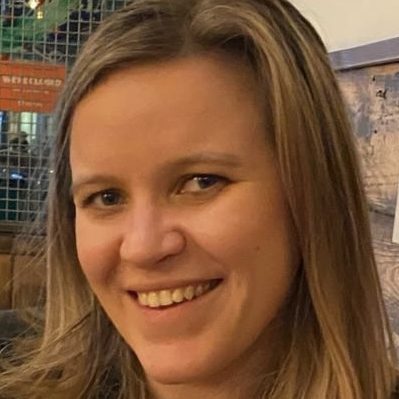
Lizzie is a paediatric registrar who is currently undertaking a Wellcome Trust Clinical PhD Fellowship under the Health Advances for underRepresented Populations (HARP) scheme at Queen Mary University London. Her interests are in paediatric infectious disease and global health; her PhD research focuses on pneumococcal vaccine responses in small vulnerable newborns
 The Prendergast Group